


Other Surface Races
Humans
Humans are diurnal, non-magical species. They come in a variety of skin colors and hair types. Male humans and female humans on average are 5'9'' and 5'4'' (1.76/1.63 m) tall. Humans are the dominant species, with an estimated population in the millions. There are many different human kingdoms and tribes. Humans, while a non-magical species, had become adept at magic through the use of magic stones, as well as blood conversion. Because of the strong demand for magic, only nobility and the very rich have been able to afford blood conversion. Regular humans, even those who have not gone through blood conversion, still enjoy the use of magic.
Humans have an average lifespan of 75-85 years. They typically reach maturation around 14 and are considered an adult at 16. Humans can produce children year-round and have pregnancies that are nine and half months. They typically produce 1 to 2 children per pregnancy, though most commonly 1 child. Human women can reproduce once every eighteen months to two years. Human males typically help the female raise the child and often make life-long relationships with the female with whom they share offspring.
CLICK TO SEE ENLARGED IMAGE
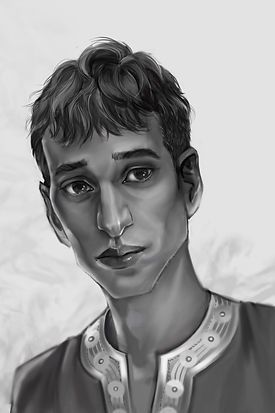
While humans are not a strictly insular species, they do tend to live and marry mostly with humans. This is not due to negative views on interspecies relationships, but because many other species around them have negative views of interspecies relationships, and because laws that favor non-humans getting children in case of divorce. Humans do have negative views on, though are not entirely against, relationships with species that are partially animal, like centaurs, satyrs, kitseeth, and fiaseeth. Humans can produce viable offspring with any sentient mammalian species (the only non-mammalian species are harpies, naga, aescels, and sirens). When reproducing with non-human species, they will typically produce that species as long as the child is at least 25 percent the other species.
Humans speak Common. Some speak old Dagmarian, Meridional, old Croulian, or Avisian which are based on Danish, Spanish/Portuguese, French, and Persian respectively.
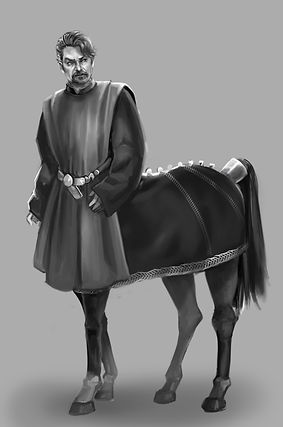
Centaurs are a diurnal, non-magical species. They have the the bodies of humans from their head to their midsection. Then the lower half of their body is the body and four legs of a horse. Their horse body is the size of lighter horse breeds, and they typically weigh between 800-1200 lbs (362.87-544.31). Centaurs have a lifespan of 65 to 75 years. Centaurs in northern Gattenwood and central Nortram have fair pale skin tones. Centaurs in central Croulia and central Gattenwood have normal pale skin tones. Centaurs in southern Gattenwood and northern Rohu have swarthy pale skin tones. Centaur women are only can get pregnant once a year. They only have one foal at a time and are pregnant for eleven months. They can only produce one foal every four to six years.
Centaurs have two stomachs, two hearts, two sets of lungs, and a very long intestinal system. Because of this, centaurs can eat both human food and grass. They eat three to four times as much as humans, and at least half of that food must be high in fiber in order to clear their digestive system. Because of their two hearts, one heart can be injured, and they still can function with one heart. If the second heart is left unhealed, they usually die ten to fifteen years prematurely from a heart attack. Centaurs only have one set of reproductive organs, and that is in the horse half of their body, and in the same location that a horse has their reproductive organs.
Centaurs are an extremely insular community. They consider themselves superior to other races. They discourage interracial marriage, though are perfectly fine with casual liaisons with members of other species. In many centaur communities, a married man having a casual liaison with a non-centaur woman is not considered to be adultery. If a centaur child is born to a non-centaur woman, they will seek to bring the child into their community. When centaurs reproduce with other species, they will produce centaur babies, as long as the children are at least 25% centaur. Centaurs can only reproduce viable offspring with humans and dryads.
Centaurs speak Common. Some speak centaurian as well. Centaurian is based on Scottish.
Satyrs
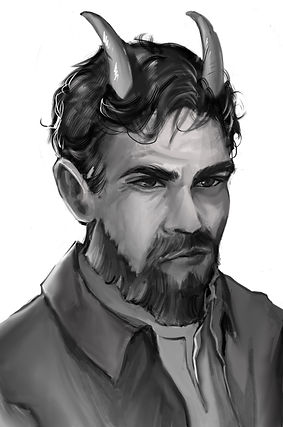
Satyrs are a diurnal, non-magical species. They have the bodies of humans from the head to the loins and have the rear, tail, and two hind legs of a goat. They also have goat horns. The average satyr male and female are 5'11'' and 5'6'' (1.81/1.68 m) respectively. They have a lifespan of 65 to 75 years. Satyrs in northern Gattenwood and central Nortram have fair pale skin tones. Satyrs in central Croulia and Gattenwood have normal pale skin tones. Satyrs in southern Gleann Rois, northern Serracole, and northern Gleann Rois have swarthy pale skin tones. Satyr females are fertile twice a year. They only have one kid at a time and are pregnant for nine and a half months. They can only produce one foal every two to three years. Males only sometimes stay with females to help rear children, and sometimes enter into lifelong relationships.
Satyrs can eat grass and regular human food.
Satyrs are an extremely insular community. They discourage interracial marriage, except with druids. However, they are open to casual liaisons with people of any species. When satyrs reproduce with other species, they will produce satyr babies, as long as the children are at least 25% satyr. Satyrs can only reproduce viable offspring with humans and dryads.
Satyrs speak Common. Some speak centaurian as well. Centaurian is based on Scottish.
Cyclopses/Giants

Giants are a diurnal, non-magical species. They have the bodies of humans, but are much larger and taller, and have six fingers and toes on each hand and foot. The average giant male and female are 9'3'' and 8'9'' (2.82/2.67 m) respectively. They have a lifespan of 65 to 75 years. Giants/Cyclops from southern Goetrock and northwestern Croulia have normal and fair pale skin tones. Giants/cyclops in northern Goetrock have fair pale skin tones, with some even having a grayish tinge to their skin tone. Giants/cyclops in Islannin have grayish-pale and bluish-pale skin tones. Giant females are fertile twice a year. They only have one baby at a time and are pregnant for fourteen months. They can only produce one baby every five to seven-year. Males only almost always stay with females to help rear children, and usually enter into lifelong relationships. Giants are often codependent and sometimes possessive of those whom they are in relationships with.
Giants eat normal human food. However, because of their large frames, they must consume a lot of food high in calcium, such as dairy products, to keep their bones from getting brittle.
While giants are not an insular species, most people try to avoid associating with them, for fear of being injured by them. Cyclopses are not as intelligent as other races and can become violent and haphazard when angered. Giants have a maternal heritage trait of having one eye. This can be gotten rid of through interbreeding, and having two eyes is considered to be a more desirable trait, as sight, depth perception, and even intelligence improves in giants with two eyes when compared to those with one eye. Because of this, mating with two-eyed individuals is considered a mark of good fortune. When giants reproduce with members of other species, they retain their large stature as long as they are at least 25% giant. Those less than 25% are still taller than normal humans but are shorter than other giants.
Giants speak Common. Some speak Goetrockian as well. Goetrockian is based on Dutch.
Hulder/Huldrekall/Huldra
Hulders are a bimodal, non-magical species. They have the bodies of humans but have a small hollow space in their backs, and the tails of various animals (usually cows, but it can be the tail of any mammal). The average hulder male and female are 5'10'' and 5'4'' (1.78/1.63 m) respectively. Hulder men are either called hulder or hulderkall. Hulder women are either called hulder or huldra. They have a lifespan of 95 to 105 years. Hulders from Ostria and northern Nortram have fair pale human skin tones. Hulders from Vestia and central Nortram have normal pale skin tones. Huldras are fertile twice a year. They only have one baby at a time and are pregnant for nine and a half months. They can only produce one child every three to four years. Males only often always stay with females to help rear children and typically enter into lifelong relationships.
Hulders eat normal human food. The hollow in their back allows them to temporarily attach to trees, and suck nutrients from them to keep from starving. They can also hibernate this way. Because of the hollow in their back, they do not have as strong lung capacity and get winded more quickly. They have better senses than humans and can see better in the dark.

Hulders are an insular species. However, they are not opposed to casual relationships with other races. However, hulder that form lifelong relationships with others are usually ostracized from the community unless they leave that individual. When hulder reproduce with members of other species, they produce hulder as long as the child is at least 25% hulder. Hulders can only reproduce viable offspring with humans.
Hulders speak Common, Dagmarian, or Nordligic, depending on the region they're from. Dagmarian and Nordligic are based on Danish and Finnish respectively.
Aescels

Aescels are a bimodal, magical species. They have the bodies of small, anthropomorphized trees. The average aescel male and female are 8'6'' and 8'0'' (2.59/2.44 m) respectively. Aescels have a lifespan of 240 to 250 years. They reach maturation at 30 years and are considered adults at 35 years. Aescals from northern Aescalland are patterned off of oak trees. Aescals from southern Aescalland are patterned off of ash trees. Aescal women are fertile once a year. They only have one baby at a time and are pregnant for eleven months. They can only produce one child every five to seven years. Males almost always stay with females to help rear children and almost always enter into lifelong relationships.
Aescels do not eat normal human food. They convert energy from the sunlight to make food, but can also drink juice or nectar to gain energy. They can also press plant life against their body to slowly absorb it into their body for energy. They have better senses than humans and can see better in the dark.
Aescels are natural practitioners of nature magic. Aescels can also rapidly regenerate their body, allowing themselves to extend their grasp and bring in back, and also to regenerate severed body parts. As long as their heads are not severed, they can regrow whatever part is lost.
Aescels are an insular species. Because of their much longer lifespans, and somewhat less intelligent minds, they generally do not associate with other races, except for limited commerce and diplomacy. They do not have social stigmas against forming relationships with other races. Aescels can only reproduce viable offspring with dryads. When the two breeds reproduce, they produce aescel children, as long as they children would be at least 25 percent aescel.
Aescels speak Common and the old language, Aergodic, which is based on old English.